From Bullion to Branding: The Universal History of the Coin and Its Symbolic Legacy

.jpg)
Coinage began over 2,600 years ago as a solution to the inefficiencies of the barter system. By transitioning from raw bullion to standardized metal strikes, ancient civilizations created the first portable medium for both economic value and political identity—a tradition that lives on today through the custom Challenge Coins used by military and corporate organizations worldwide.
The Birth of Tangible Value — Why Metal?
Before the first coin was ever struck, humanity relied on the Barter System. While effective for local trades, bartering lacked "portability" and "divisibility." You couldn't easily trade half a cow for a sack of grain, nor could you carry a herd of livestock across a desert to conduct business.
As civilizations expanded, they turned to Commodity Money—items that had intrinsic value, such as salt, shells, or obsidian. However, it was the transition to precious metals (gold, silver, and copper) that revolutionized human interaction.
The Psychological Shift: From Weight to Authority
In the early days of metallurgy, trade was conducted using "hacksilver" or raw bullion. Merchants had to weigh the metal at every transaction to ensure its purity. The true "invention" of the coin wasn't the metal itself, but the Stamp of Authority.
By striking a piece of metal with a specific weight and a sovereign seal, a government or ruler "guaranteed" its value. This eliminated the need for scales and replaced doubt with Trust. This concept—that a small piece of metal can carry the weight of an entire institution's reputation—is the foundational DNA of the modern Challenge Coin.
Key Historical References:
- The Transition from Barter: For a deep dive into how early societies moved away from simple trade, see the Smithsonian’s analysis of early commodity money.
- The Science of Value: Investopedia’s History of Money provides an excellent breakdown of why gold and silver became the global standard for "hard assets."
- The Metallurgy of Trust: Learn more about the evolution of ancient metalwork via the Metropolitan Museum of Art.
The First Strikes — The Lydian Lion and the 600 B.C. Revolution
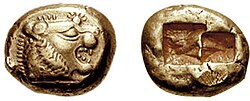
While civilizations like Egypt and Mesopotamia were using weighed bullion, it was the Kingdom of Lydia (located in modern-day Turkey) that changed the world forever around 600-610 B.C. Under the reign of King Alyattes (and later his son, the legendary Croesus), the first standardized coins were born.
The Innovation: Electrum and the "Stamping" Method
The first Lydian coins were made of Electrum, a naturally occurring alloy of gold and silver found in the Pactolus River. However, the true "revolution" wasn't the material—it was the Process.
Lydian smiths placed a heated "blank" (a smooth lump of metal called a flan) onto an anvil that had a carved design. They then struck the top with a heavy hammer using a handheld punch. This created the world’s first die-struck image: the iconic Lydian Lion.
Why the Lion? (The First Corporate Logo)
The lion was the royal emblem of the Lydian kings. By stamping this image into every coin, the King was essentially "signing" his work. This mark served three vital purposes:
- Authentication: It proved the metal was pure.
- Standardization: Every coin of a certain size had the same value.
- Propaganda: It spread the King’s image and power wherever trade occurred.
This ancient "branding" is the direct ancestor of the custom Corporate Pins and logos we produce today. We are still using the same logic: A physical mark of authority builds trust.
Key Technical Terms:
- Obverse: The "heads" side of the coin (where the Lion appeared).
- Incuse: The "punch" mark on the back of early coins, which was functional rather than decorative.
- Planchet (or Flan): The blank piece of metal before it is struck.
Key Historical References:
- The First Coin in History: Explore the British Museum’s collection of Lydian Staters, widely considered the oldest coins in existence.
- Numismatic Origins: PCGS (Professional Coin Grading Service) provides a detailed breakdown of the Lydian Lion's impact on global economics.
- Ancient Metallurgy: For more on how Electrum shaped early trade, see the World History Encyclopedia’s entry on Ancient Greek Coinage.
The Expansion of Identity — Greece, Rome, and the Birth of Mass Media
As the technology of the Lydian Lion spread throughout the Mediterranean, the purpose of the coin shifted. It was no longer just about silver and gold; it was about Brand Recognition.
The Greek "Niche" Brand
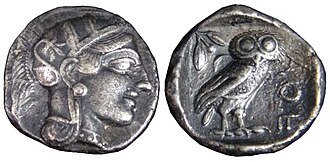
Ancient Greek city-states were the first to use coins as a declaration of local pride. Each city chose a symbol that defined their "tribe." Athens famously minted the Athenian Owl, a symbol of wisdom and their patron goddess, Athena. For nearly 400 years, the "Owl" was the most trusted "global currency," much like how a trusted corporate logo today signals quality and heritage. Other cities used local mythology and deities—turtles for Aegina, Pegasus for Corinth—creating a diverse landscape of metallic identities.
Rome: The World's First Social Media
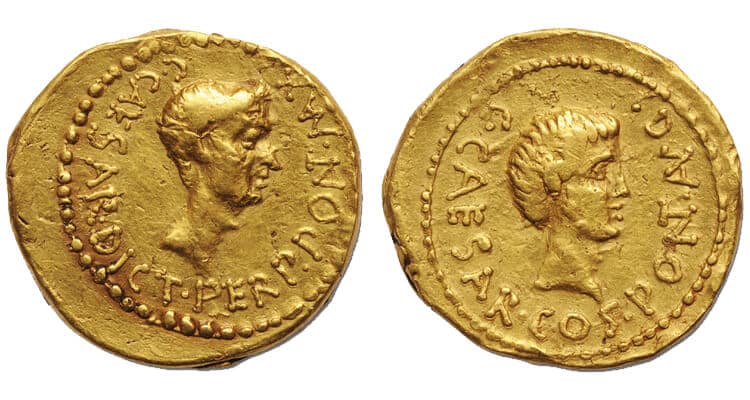
While the Greeks focused on gods and art, the Romans realized that coins were the most effective way to communicate with a massive, illiterate population. When Julius Caesar broke tradition and became the first living Roman to put his own portrait on a coin, he invented a form of "Viral Marketing."
Every time a legionnaire was paid or a merchant bought grain, they saw the face of the Emperor. Coins became a portable newsfeed, announcing military victories, new infrastructure, or the rise of a new heir. This Roman tradition is the direct ancestor of the modern Challenge Coin. Just as a Roman general might distribute coins to reward his soldiers' loyalty, today’s military and first responders use custom coins to signify membership in an elite unit and commemorate shared missions.
Technical Evolution: The Move to Bi-Metallic Pride
The Romans also pioneered the use of different metals for different "ranks" of value—Sestertii made of orichalcum (a golden-colored brass), Denarii of silver, and Aurei of gold. This Roman monetary hierarchy taught us that the finish and material of a piece (whether it’s antique gold or polished silver) dictates its perceived prestige—a principle we still apply when designing high-end custom pins.
The Renaissance Pivot — When Coins Became Art and Awards
During the Middle Ages, coinage had become somewhat crude and purely functional. However, the Renaissance brought a hunger for personal legacy and the revival of Roman ideals. This era saw the birth of the Commemorative Medal, a physical object designed specifically for honor, not for the marketplace.
Pisanello and the Portrait Medal
In 1438, an Italian painter named Antonio di Puccio Pisano (known as Pisanello) created what is considered the first modern portrait medal. Unlike the mass-produced coins of the time, these medals were larger, more detailed, and often created using the lost-wax casting technique.
These medals weren't spent at a bakery; they were exchanged between nobles, scholars, and diplomats as tokens of friendship and prestige. This is the direct psychological ancestor of the modern custom medal and the high-end corporate recognition items we produce today. The value moved from the weight of the metal to the weight of the achievement it represented.

The Invention of the Screw Press
By the 16th century, the "hammer and anvil" method began to fade. The invention of the Screw Press (often attributed to designs by Leonardo da Vinci and later perfected by others) allowed for much higher pressure and precision.
This technological leap allowed for:
- Perfect Circularity: Coins and medals became perfectly round for the first time.
- Intricate Edge Lettering: A security feature that also allowed for customized edges, a popular feature in today’s challenge coins.
- Uniformity: Every piece was identical, creating a sense of "limited edition" consistency that collectors still crave.
The "Commemorative" Split
This era officially split the industry into two paths. One path led to the utilitarian, government-issued paper and base-metal currency we use today. The other path led to the Commemorative Coin—objects created to celebrate a mission, a person, or a milestone. Whether it’s a NASA mission patch rendered in metal or a military unit coin, the Renaissance taught us that the most valuable things we carry aren't always used for buying—they are used for remembering.
The Industrial Revolution and the Enamel Breakthrough
While the Renaissance perfected the shape of the medal, the Industrial Revolution of the 18th and 19th centuries perfected the scale and color. Before this era, adding color to metal was a slow, artisan-only process reserved for royalty. Industrialization changed the game, making the lapel pin the world’s first truly mass-produced medium for personal expression.
From Steam Presses to Mass Identity
The transition from hand-operated screw presses to steam-powered coin presses (pioneered by Matthew Boulton and James Watt) allowed for thousands of identical pieces to be struck in a single day.
This coincided with the rise of Fraternal Organizations and Political Campaigns. During the mid-1800s, especially during the American Civil War, soldiers began wearing unit badges and pins to identify their regiments. This was the moment the "Badge" evolved into a tool for organizational branding, a legacy we continue today by helping companies create their own corporate identity pins.
The Enamel Revolution: Hard vs. Soft
As manufacturing scaled, so did the art of Enameling. This involved fusing glass-like resins into the recessed areas of a struck metal piece. Two distinct paths emerged, both of which are still the industry standard at PinProsPlus:
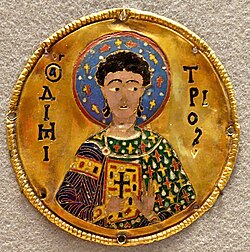
- Hard Enamel (The Modern Cloisonné): Based on the ancient Byzantine technique of Cloisonné, this method involves multiple firings and polishing the enamel flat until it is level with the metal borders. It became the gold standard for high-end awards and prestige pins.
- Soft Enamel (The Raised Texture): A more cost-effective industrial innovation where the enamel is painted into the "valleys" of the metal but not polished flat. This creates a 3D textured look that is highly durable and popular for everything from sports trading pins to streetwear brands.
The Victorian "Sweetheart" Pins
By the late Victorian era, pins had become a sentimental staple. During the World Wars, "Sweetheart Pins"—miniature replicas of military insignias—were given to wives and mothers by soldiers heading to the front. This solidified the pin not just as a piece of metal, but as an emotional anchor. It proved that even a small, mass-produced item could carry profound personal meaning—a philosophy that drives every custom project we handle.
The Modern Era — Challenge Coins, Pop Culture, and the Future of Metal Identity
As we moved into the 20th and 21st centuries, the "coin" underwent its most dramatic shift yet. While government-issued currency became increasingly digital and utilitarian, the Commemorative Coin and the Custom Pin exploded in popularity as the ultimate symbols of "The Inner Circle."
The Rise of the Modern Challenge Coin
While various legends trace the Challenge Coin back to World War I, it was during the Vietnam War and the subsequent decades that the tradition truly solidified. The "Coin Check"—a ritual where a soldier must produce their unit's coin or buy a round of drinks—became a symbol of brotherhood and shared sacrifice. Today, this tradition has crossed over into Law Enforcement, Firefighters, and even the White House, where every President since Bill Clinton has issued their own official Executive Coin.
The Pop Culture and Trading Phenomenon
In 1999, the launch of Official Pin Trading at Walt Disney World sparked a global revolution. Suddenly, custom pins weren't just for military lapels or corporate anniversaries; they became a high-velocity hobby. This "Trading Culture" spilled over into youth sports, where "trading pins" at tournaments became as important as the games themselves. At PinProsPlus, we see this every day: a pin isn't just a piece of metal; it’s a social currency that facilitates connection and conversation.
21st Century Tech: From 2D to 3D Masterpieces
Modern manufacturing has taken the ancient "hammer and die" and replaced it with high-precision CNC machining and 3D Zinc Alloy Casting. We can now achieve levels of detail the Lydian kings could only dream of, including:
- Photo-Realistic UV Printing: Putting high-resolution digital images directly onto metal.
- Dual-Plating: Combining gold and silver finishes on a single piece for a high-contrast, luxury look.
- Functionality: Integrating bottle openers, spinners, or even QR codes into the design.
Why Metal Still Matters
In an era of NFTs and digital badges, the physical weight of a Custom Coin or Pin provides something technology cannot: Permanence. When you hand someone a custom-crafted piece of metal, you are participating in a tradition that spans back to the dawn of civilization. You are giving them a piece of history, a mark of authority, and a symbol of belonging that will last for generations. At PinProsPlus, we don't just make pins and coins—we help you strike your own mark on history.

.webp)
.webp)
.webp)
.webp)
.webp)
.webp)
-min.avif)
.webp)
.webp)
.webp)
.webp)
.webp)
.avif)